
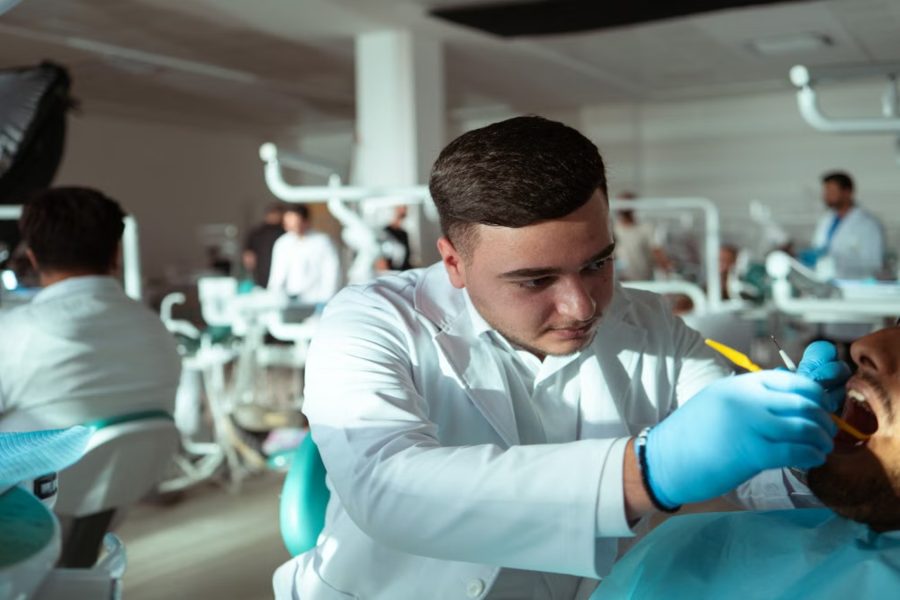
Many students finish high school with little knowledge of how the future could work out for them. They know they want to have a good career when they reach their full potential, but that is about it. They do not have much of an idea of what possible future career possibilities may exist for them. Healthcare is one industry that most people are familiar with, but rarely do people realize that there are many different careers in this industry that are potential future career possibilities. A student may see their doctor from time to time or nurse and even get to tour a major hospital, but until students experience the many different careers in this industry up close and personally, most do not realize that many of the careers in this industry require education after high school.
The opportunity for students to have early career exposure is vital to them gaining insight into various careers and realizing that they can have a healthcare career too. Healthcare careers can be very abstract to many students and can seem very far away. Although there are many aspects of healthcare, there are many careers in this field that students can be exposed to. Exposure to nurses, doctors, therapists, researchers, and administrators can open students’ eyes to possible health careers. It is also important for students to see the different paths that are available to obtain these careers and the types of education and training that are required.
There are many benefits to early career exposure for students, including allowing them to see the many different career options available and helping to find a career where their skills would best be used. For students interested in healthcare careers in particular, early exposure can help them to become aware of the many different ways in which they can put their natural curiosity, their caring nature, their problem-solving skills, and their life experiences to work in helping to ensure people’s health.
Helping Students See the Many Faces of Healthcare
Helping students connect healthcare careers with real pathways is an important part of career exposure. Many students may know about doctors and nurses, but they may not realize how many different roles exist within the healthcare field. Nursing, for example, is one of the most visible careers in healthcare, and it can appeal to students who are caring, patient, observant, and interested in helping others.
But nursing is not limited to one setting or one type of work. Nurses can work in hospitals, community clinics, schools, public health organizations, and specialty care environments. Some focus on emergency care, intensive care, surgery, pediatrics, mental health, or long-term care. Others move into education, leadership, research, or care coordination. When students see this variety, they begin to understand that healthcare is not one narrow path. It is a field with many doors, and different students may be drawn to different parts of it.
Showing Students How Interest Becomes a Pathway
It is also important to help students understand how a healthcare interest can become a real education and career pathway. This should be presented in an age-appropriate way. A seventh-grade student does not need to plan every step of the next several years, but they can begin to see how today’s choices connect to future opportunities.
For example, science classes can help students understand the human body. Communication skills can help them learn how to speak clearly with patients and families. Volunteering in healthcare settings can give them a closer look at how care teams work. Asking questions of healthcare professionals can also help students understand what training, education, and personal qualities different careers require.
As students get closer to college, they can begin comparing programs that match their interests and goals. A student interested in nursing in a major healthcare city, for instance, may eventually research a nursing degree in Houston, students can pursue this as part of understanding how classroom learning can lead to clinical preparation. In this way, career exposure does more than introduce students to job titles. It helps them see how curiosity can grow into a plan.
Connecting Students’ Present to Healthcare Careers of the Future
One of the most encouraging parts of career exposure is helping students recognize that they are already building useful skills. Healthcare may seem highly technical, and in many ways it is. But the foundation begins earlier than students might think.
The student who listens carefully to a friend has already practiced the empathy necessary to care for people in a variety of healthcare settings. The student who is able to work through difficult math problems on tests has the necessary persistence to work with the wide array of technology used in the various healthcare settings. The student who is curious and asks great questions in science classes has the necessary curiosity to ask questions about patient care in any setting. The student who is able to translate for family members and patients at appointments already has the skill to clearly communicate with patients in a variety of healthcare settings.
A Mentor Makes the Career More Real and Relevant
Online resources can give students an overview of health care careers, but they can never replicate the experience of a real person talking about their work. There is something about a real person talking about their life that makes a big difference. And it is the details that a person sharing their career with you can give you that make a big difference. For example, a person can describe to you what a typical day is like for them, and they can also describe to you some of the things that have surprised them about their career. They can also share with you some of the things that they wish they had known when they were younger.
An honest portrayal of careers in health is the only way for students to get real information on what the profession holds. We want students to get the sense that there is purpose in a health career. However, we also do not want to present it as an easy job. Health professionals work long hours and must be able to function as part of a team and deal with patients who entrust them with their health and well-being. Some days they can be deeply affected by the emotional aspects of the work. Other days they will be grateful for the sense of satisfaction that comes from helping to heal a patient or solving a problem that has been affecting the patient’s health.
How Educators Can Support Early Healthcare Exploration
Educators play a key role in helping students connect career exposure to everyday learning. A single classroom conversation can spark curiosity, but ongoing encouragement helps that curiosity grow.
When looking to aid students in relating their classroom experiences to future career options, teachers, school counselors, and administrators can use the following approaches to aid students in learning about health careers: aid in planning for future coursework and volunteer opportunities that expose students to health careers, explore different health careers and how students can attain them, and look to create partnerships between the school and local health organizations or businesses. These partnerships will give administrators, teachers, and counselors as well as students an opportunity to tour health organizations, meet professionals in various health careers, and learn more about health careers and how students can attain them.
Giving Students Permission to Imagine More
Early career exposure gives students something practical, but it also gives them something emotional. It gives them permission to imagine more for themselves.
Some students are already confident that they have found the perfect future career. However, other students have not really thought about the future as of yet and are somewhat unaware of the vast amount of career options available. Some students have never thought about their future in relation to how they can contribute to society and bring value to others and find work that they can feel proud of. Finally, there are some students who have always been interested in a particular career but have never had the opportunity to meet someone who works in that career.