
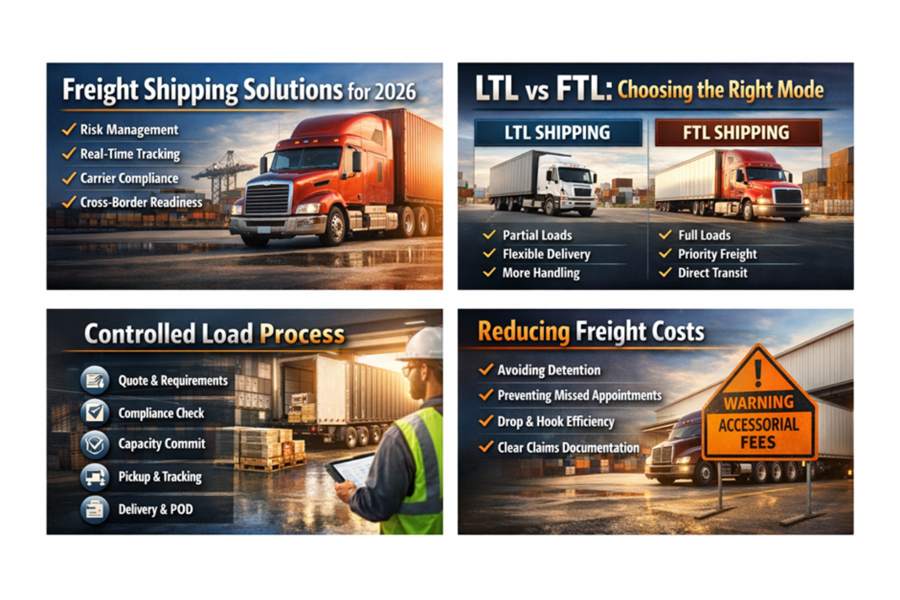
As of 2026, a shipper is no longer just a vendor. It’s a risk management tool. The so-called “cheap” option may end up being the most expensive load the moment reality strikes with detention, missed appointments, claimed damaged freight, or carrier compliance. This year, the successful ones are the operators who selected a logistic provider who sees freight as a process, a machine instead of just an account. Choosing the right logistics provider in 2026 means selecting a partner who manages risk, visibility, compliance, and capacity as a unified operational system — not as separate services.
HMD Trucking is a trucking service company built with a driver-first philosophy: enough capacity, full compliance, true transparency, and real performance at the docks. Shippers live this driver-centric experience by having quicker on-time delivery, fewer accessorial surprises, clear load visibility, and the chance to return in a calm way as the route changes.
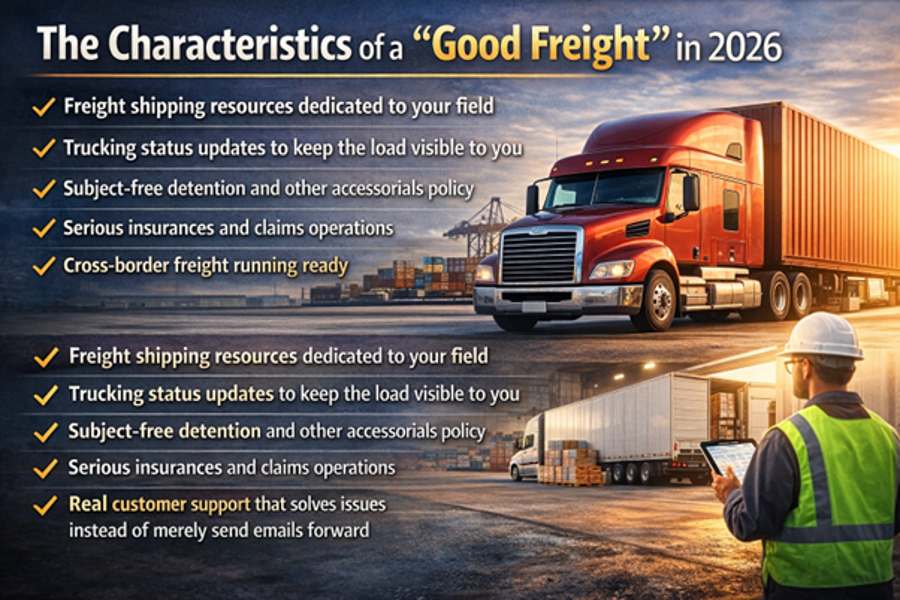
The Characteristics of a “Good Freight” in 2026
The struggles of the shipper are no secrets. They are just issues that keep coming back.
A load is “covered”, for example, yet there is no confirmation of the trailer’s position. Tracking is on-hand but only for an outdated version or that which is incomplete; or delayed. Detention has hardly been a matter this month, it is always additional. Claims mean a long email chain with missing attachments.
Border moves are usually postponed due to the fact that documents have not been checked in advance.
FMCSA says it openly: the federal regulations are a must for carriers – they are the baseline that indicates what is safe and what is compliant. When a carrier throws compliance away to the back burner, the risk is placed on the shippers.
Meanwhile, the labor market is still in charge of freight capacity planning. The most recent ATA driver shortage update and the projection provide an explanation for the realization of the shortage in last-minute ordering.
So, what does a good partner give?
Freight shipping resources dedicated to your field
Trucking status updates to keep the load visible to you
Subject-free detention and other accessorials policy
Serious insurances and claims operations
Cross-border freight running ready
Real customer support that solves issues instead of merely send emails forward
LTL shipping vs FTL shipping: choose the right tool
Shipping companies who mismatch freight to the wrong mode is a very important reason for overpaying. Generally speaking, LTL shipping and FTL shipping are neither better nor worse than each other; they both have their place but the service expectations should be different. For oversized or specialty cargo like vehicles, international car shipping requires different expertise than standard freight services, with providers offering customs documentation, specialized carriers, and door-to-door delivery options tailored to automotive transportation across borders.
LTL vs FTL in a Shipping Environment of 2026
| Factor | LTL Shipping | FTL Shipping |
| Best use case | Partial freight, flexible delivery windows | Full trailer or high-priority freight |
| Handling touches | Higher (terminal transfers) | Lower (direct move) |
| Damage exposure | Higher (more touches) | Lower (fewer touches) |
| Tracking clarity | Often event-based | Stronger location context |
| Lead time for capacity | Moderate | Can be tight in peak periods |
| Accessorial risk | Higher | Lower when well planned |
| Ideal outcome | Cost efficiency per pallet | Reliability, speed, fewer surprises |
If your company has time-sensitive orders, customer SLAs, or high-value products, FTL often looks better even if the freight is not handled as much and the schedule is not drifting.
How HMD’s Freight Shipping Services Stand Out
A carrier can go ahead and say it to a tender. The real test occurs post-pickup.
1) Dedic /m/ cap toe
Carriers and shippers looking forward to a stable plan rather than on empty hope.
Thus major capacity is a place to put equipment and drivers only to touch short-messaging and lower reliability.
Task carrying is offloaded, thus drivers are more reliable.
2) Shipment tracking that is useful enough to bring visibility
Many systems are equipped with transport shown on a map only, but that is not useful for shippers.
Their task is to work on shipment tracking within the systems to make proactive updates, increase load visibility. For instance, early warnings when unexpected delays occur, this includes clear ETA logic with proactive updates.
3) Drivers arriving at docks with proper handling
The dock is the place, where the quality of the whole operation is determined. Having clear appointments, well-managed check-ins, and a good trailer move are the key to both a clean delivery and a week free of accessorial disputes.
Scheme — A “Controlled Load” Operational Flow
An informal framework of what a carrier with a shipper mindset should do regarding a load:
Freight Quote Request:
- Lane + Requirements Review (equipment, timing, accessorial expectations)
- Carrier Compliance Check (authority, insurance, safety posture)
- Capacity Commit (dedicated capacity or confirmed coverage)
- Pickup Execution + Status Confirmation
- Shipment Tracking + Load Visibility Updates
- Delivery + POD + Exception Notes (if any)
- Insurance/Claims Path (only if needed, with documents ready)
This is the difference between “freight we will let you know” and “controlled freight.”
Deductions, Detention, and the Unreal Costs That Awfulize Budgets
The base rate is hardly ever final. The extras are like something that is not included and are often overlooked in freight budgets, especially when transporters and airlines do not show the full scope upfront.
Freight cost triggers that cause an imbalance are:
- Detention at the shipping end or at the receiver’s dock
- Layover situations due to appointment changes
- Re-delivery or rescheduling
- Driver assist requirements
- After-hours pickup/delivery
Special equipment needs not tendered correctly
Accessorial Risk Map (and How to Reduce It)
| Risk area | Why it happens | How to reduce it |
| Detention | Dock congestion, slow loading | Tight appointment discipline + drop strategies |
| Missed appointments | Late tenders, weak updates | Proactive customer support + live ETA updates |
| Re-delivery fees | Receiver refusal, reschedule | Pre-confirm receiver requirements |
| Claims escalation | Missing photos/POD data | Clear insurance/claims workflow + documentation |
| “Surprise” accessorials | Requirements not stated | Tender templates + upfront lane rules |
An example of an operational lever that can eliminate exposure in the proper networks is drop & hook: preloaded trailers or trailer pools that can save dock time and safeguard driver productivity. It might not work for all shippers, but in those cases, where it does fit, it is a robust advantage.
Shippers who are after a clean, plain-English explainer on the drop & hook, this video serves as a good baseline:
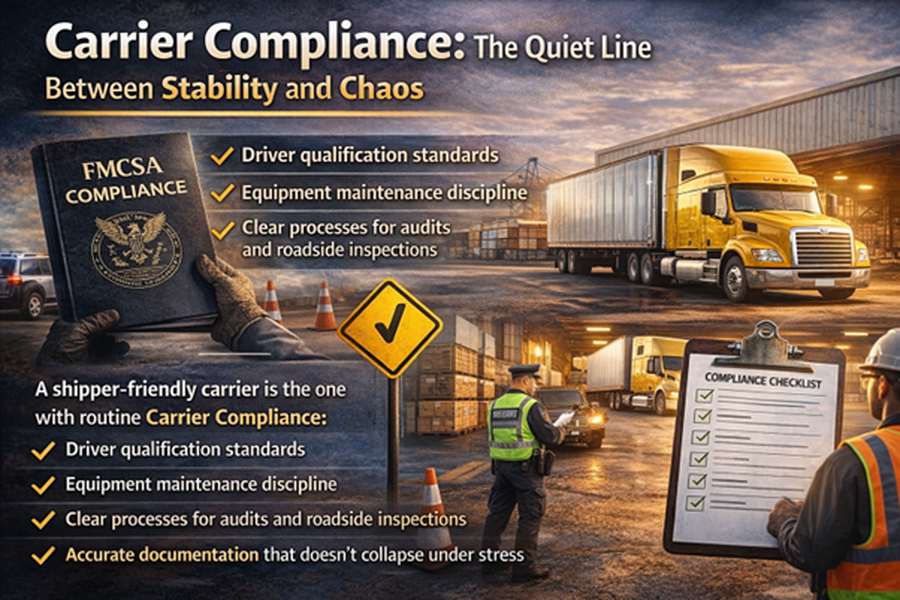
Carrier Compliance: The Quiet Line Between Stability and Chaos
Shippers do not think about compliance very often. Still, in 2026, one cannot dismiss the importance of outsourcing risk awareness.
FMCSA’s compliance website is the go-to resource. The FMCSA field operations manual provides operational context, explaining how enforcement and compliance processes are performed.
A shipper-friendly carrier is the one with routine Carrier Compliance:
- Driver qualification standards
- Equipment maintenance discipline
- Clear processes for audits and roadside inspections
- Accurate documentation that do not collapse under stress
If you have freight that is high-value or high-sensitivity then that discipline will show up as fewer disruptions and smoother delivery.
If you want to brief-teach the trainer’s teams who don’t need to learn the FMCSA language, you can use this type of “CSA overview-style” training video as a practical starting point.
Insurance/Claims: Best When Everything Is Not Okay
Nobody wants to work with a carrier with a history of claims, but it is vital to choose one based on their claim resolution approaches.
The well-managed process for claims and insurance includes:
- Immediate incident recording (photos, timestamps, location)
- Written chain of custody notes
- Fast POD access and exception reporting
- A clean claims pathway (never “email me at this generic inbox”)
A great shipping company’s value is found in reduced time: shorter closing periods, fewer disputes, and less internal effort.
Cross-Border Freight: Where Preparation Beats Speed
Cross-border freight has a rise in complexity with well-prepared documentation, timely border crossing, and extra attention to compliance gaps. It is better to choose a carrier that consistently handles it rather than one that claims perfection.
Shippers should expect:
- Document pre-checks (before the truck arrives at the border)
- Obvious roles: who owns which step
- Consistent message updates so your team isn’t guessing
Customer Support: The Feature You Only Notice When It’s Missing
Customer support in its true sense is not cheerful emails. It is:
- Owning problems as early as possible
- Taking the initiative to fix the issues
- Giving the ETAs they believe they can meet or a fast admission of uncertainty
- Creating documentation exceptions so finance and operations won’t get stuck later
- Whenever shippers talk about their desire for a “partner”, this is typically what they mean.
FAQ
How to know when to use LTL shipping or FTL?
LTL shipping is your way to go if your load is partial and you are okay with longer delivery time and more handling. Use FTL shipping when reliability of transport, fewer handling steps, clear tracking, or higher-value freight are more important than the per-pallet cost.
What should a freight quote include in 2026?
A good freight quote is a secure way that includes service confirmations: appointment type, expected accessorial sins, detention contract enforceability, expected tracking, equipment prerequisites, and claims coverage basics – of course not just a linehaul number.
Why on-time delivery is more than just being fast?
On-time delivery is, after all, about making a professional-quality execution: appointment discipline, dock coordination, trailer readiness, proactive updates, and planning that stays in reality.
What comes with drop and hook and why is it important?
Drop & hook is about trailer swap instead of waiting for the live unloading/loading. When set up correctly, it eliminates dwell time, limits detention exposure and stabilizes the schedule.
What insurance or claims related queries should we have before tendering loads?
You need to ask for documentation of incidents, how quickly PODs and exception notes are issued, how the claims process escalates and what the expected timelines to resolve those claims are. Good insurance/claims processes are by design and not by chance.
Overall Conclusion: Why HMD Should Be the first choice in 2026?
In an environment where suppliers are in high demand and the demand for compliance is high, the shippers will have more than just the trucks: they need to perform tasks consistently as well.
HMD’s freight shipping services are designed to ensure:
- Consistent and on-time delivery
- Clear and accurate shipment tracking with real load visibility
- Detention handling and accessorials that are clear
- Strong carrier compliance
- Mature insurance or claims support
- Scalable dedicated capacity
- Preparedness for cross-border freight
- Customer support that is reliable
- Efficient options like drop and hook where it fits
If you want to minimize unexpected changes and operate your logistics as a set system, not as a daily firefight, based on this standard you should subject every provider.